Links:
http://www.cattletoday.com/archive/2008/February/CT1428.shtml
http://jds.fass.org/cgi/content/abstract/90/5/2538
Thursday, February 28, 2008
Wednesday, February 27, 2008
Drinker, Quail Eggs
 A Leaking Pig Drinker
Tip: Check your pig drinkers daily as water is very important for them. A slight change in water pressure can affect the appetite of the pigs and may have a heavy effect on your herd. Water flow rate in grower-finisher pigs and the sows must not be lower than 2 liters per minute. Also, verify it on a daily basis. Some drinkers are installed with strainers that catch dirt and can obstruct water flow. Take note also of wastage (look at the photo). One liter per minute is 1440 liters per day and 10000 liters per week! Immediately fix or replace leaking nipples because it is cheaper to buy a new one than waste that amount of water.
 Quail Eggs
Some extras: Candle and Mug


Tuesday, February 26, 2008
Animal Industry in the Philippines
Animal breeding is the foundation of profitable production and one of the pillars of a strong nation. By having a strong animal breeding program in whatever species of farm animal, the citizenry is assured of adequate supply of food.
Animal breeding has been around since domestication of animals. There was a need for domestication because our ancestors needed animals for many purposes like draft, meat, milk, hide and egg. Animals were bred on purpose before history was written but the earliest record was that in the bible particularly in Leviticus 21. Of course that pertains to humans but it also applies to animals. The earliest records on animals were those written by the Sumerians and Turks whom kept records of breeding history of their horses. The Sumerians bred the Arabian horse with lineage that can be traced to date and the Turks from Turkmenistan bred the Akhal-Teke. The practical application of animal breeding was first implemented in England by Robert Bakewell in the 1700s. He bred sheep and cattle and produced animals that were sought after in his time. He also pioneered inbreeding and progeny testing. Gregor Mendel on the other hand was the father of genetics. He studied heredity and established two important laws of genetics. These are the Law of Segregation and the Law of Independent Assortment. Charles Darwin on the other hand established that natural selection is an evolutionary force. Another British, Ronald Fisher, provided statistical basis for inheritance.
In United States of America, Sewall Green Wright founded the modern theoretical population genetics and Jay Lush founded the science of animal breeding. He investigated and assessed traits of farm animals and improved them by initiating breeding programs that were practical yet effective. Interestingly, they were both based in research centers of agricultural universities.
The Philippines, being formerly under different colonizers---Spain, USA, and Japan---is still struggling with developing our own agricultural resources. Because before, as a colony, we were only after the production of what our colonizers needed like coffee, coconut, spices, and sugar and there were no efforts on the development of our own animal industry as a nation.
This is evident until today, for example, majority of our dairy requirement is imported. Only a small segment of the Philippine milk market is supplied by local producers. We also import a lot of beef and carabeef to augment our industrial requirements.
Dairy and beef cattle breeding in US and in Europe on the other hand is more focused and has a direction in a national framework because they have existing national breeding programs. Here, many farms rely on the products of foreign breeding programs which in the end may not be beneficial because our environment is different from theirs. Also, majority of our cattle are raised in small-scale backyards that often efficiency is sacrificed. I think that if we want to become more efficient we have to shift to bigger scale of production. This can be accomplished by the formation of producer’s cooperatives like what the Batangas Dairy Cooperative did.
The swine and poultry industry, meanwhile, is different. Most of the commercial swine farms that we have has advanced and directed breeding programs. Even the production performance of the commercial swine farms are at par with foreign counterparts but sadly, it only comprises a small percentage of our national output since majority of our pigs are grown in small and medium farms which are also backyard based and are lacking the technology and skills that are readily accessible and available to bigger farm enterprises. The transfer of genetics in this setting is also slow because the common backyard swine farmer is very difficult to educate. For example, some would not even take a second look at artificial insemination.
On the other hand, broiler and layer breeding are mostly done and directed by foreign companies and we are always at their mercy. This makes genetic cost quite high in these species. The broilers and layers being grown in the Philippines are foreign-bred. Expectedly, production performance is also at par with that of the rest of the world. It also helps that the buildings on most broiler and layer farms are being upgraded. Many buildings that are in use in the country are computer controlled mostly those that are owned by big companies. This improvement in housing is further improving the performance of broilers and layers.
One big obstacle in our country’s production of farm animals is the high cost of feeds which accounts for more than half of the production cost. This is due to scarcity of raw materials and the inefficient post-production and transportation system that we currently have. Local yellow corn for example, which comprises more than half of poultry and swine feeds, can be relatively scarce and toxin laden when the weather is on the extremes. Here in Cavite, there is no existing corn drying facility where small scale farmers could bring their produce during the rainy season. In addition, the continuing increase in fuel cost and hoarding by traders in some corn areas are also directly affecting the cost.
Soybean oil meal is another commodity that also has a big impact on the cost of feeds. It is the primary protein source or our pigs and chicken and we are importing our requirements from US, Argentina, and India.
In contrast, in US, they have vast lands planted with corn and soya. This, coupled with good post-harvest facilities and efficient transportation makes their feed raw materials cheap. This is brought about by the laws that were implemented early on their nationhood like the Homestead Act which gave the landless settlers their own areas to farm, the establishment of agricultural colleges and research stations which had strong extension efforts, and the aggressive mechanization of farm labor. This improved the efficiency of their agriculture and kept their production cost low. In addition, their government is heavily subsidizing farms and is even extending credit.
The Philippines, in general, has much to be learned in terms of animal production and breeding. The government can improve on many things like infrastructure improvement especially on transportation and post-harvest. We must also strengthen the extension services of our government research institutions so that investment on them can be maximized and be felt by the small farmers. Also, incentives for agriculture students must be in place to encourage more scientific farmers in the future.
Animal breeding has been around since domestication of animals. There was a need for domestication because our ancestors needed animals for many purposes like draft, meat, milk, hide and egg. Animals were bred on purpose before history was written but the earliest record was that in the bible particularly in Leviticus 21. Of course that pertains to humans but it also applies to animals. The earliest records on animals were those written by the Sumerians and Turks whom kept records of breeding history of their horses. The Sumerians bred the Arabian horse with lineage that can be traced to date and the Turks from Turkmenistan bred the Akhal-Teke. The practical application of animal breeding was first implemented in England by Robert Bakewell in the 1700s. He bred sheep and cattle and produced animals that were sought after in his time. He also pioneered inbreeding and progeny testing. Gregor Mendel on the other hand was the father of genetics. He studied heredity and established two important laws of genetics. These are the Law of Segregation and the Law of Independent Assortment. Charles Darwin on the other hand established that natural selection is an evolutionary force. Another British, Ronald Fisher, provided statistical basis for inheritance.
In United States of America, Sewall Green Wright founded the modern theoretical population genetics and Jay Lush founded the science of animal breeding. He investigated and assessed traits of farm animals and improved them by initiating breeding programs that were practical yet effective. Interestingly, they were both based in research centers of agricultural universities.
The Philippines, being formerly under different colonizers---Spain, USA, and Japan---is still struggling with developing our own agricultural resources. Because before, as a colony, we were only after the production of what our colonizers needed like coffee, coconut, spices, and sugar and there were no efforts on the development of our own animal industry as a nation.
This is evident until today, for example, majority of our dairy requirement is imported. Only a small segment of the Philippine milk market is supplied by local producers. We also import a lot of beef and carabeef to augment our industrial requirements.
Dairy and beef cattle breeding in US and in Europe on the other hand is more focused and has a direction in a national framework because they have existing national breeding programs. Here, many farms rely on the products of foreign breeding programs which in the end may not be beneficial because our environment is different from theirs. Also, majority of our cattle are raised in small-scale backyards that often efficiency is sacrificed. I think that if we want to become more efficient we have to shift to bigger scale of production. This can be accomplished by the formation of producer’s cooperatives like what the Batangas Dairy Cooperative did.
The swine and poultry industry, meanwhile, is different. Most of the commercial swine farms that we have has advanced and directed breeding programs. Even the production performance of the commercial swine farms are at par with foreign counterparts but sadly, it only comprises a small percentage of our national output since majority of our pigs are grown in small and medium farms which are also backyard based and are lacking the technology and skills that are readily accessible and available to bigger farm enterprises. The transfer of genetics in this setting is also slow because the common backyard swine farmer is very difficult to educate. For example, some would not even take a second look at artificial insemination.
On the other hand, broiler and layer breeding are mostly done and directed by foreign companies and we are always at their mercy. This makes genetic cost quite high in these species. The broilers and layers being grown in the Philippines are foreign-bred. Expectedly, production performance is also at par with that of the rest of the world. It also helps that the buildings on most broiler and layer farms are being upgraded. Many buildings that are in use in the country are computer controlled mostly those that are owned by big companies. This improvement in housing is further improving the performance of broilers and layers.
One big obstacle in our country’s production of farm animals is the high cost of feeds which accounts for more than half of the production cost. This is due to scarcity of raw materials and the inefficient post-production and transportation system that we currently have. Local yellow corn for example, which comprises more than half of poultry and swine feeds, can be relatively scarce and toxin laden when the weather is on the extremes. Here in Cavite, there is no existing corn drying facility where small scale farmers could bring their produce during the rainy season. In addition, the continuing increase in fuel cost and hoarding by traders in some corn areas are also directly affecting the cost.
Soybean oil meal is another commodity that also has a big impact on the cost of feeds. It is the primary protein source or our pigs and chicken and we are importing our requirements from US, Argentina, and India.
In contrast, in US, they have vast lands planted with corn and soya. This, coupled with good post-harvest facilities and efficient transportation makes their feed raw materials cheap. This is brought about by the laws that were implemented early on their nationhood like the Homestead Act which gave the landless settlers their own areas to farm, the establishment of agricultural colleges and research stations which had strong extension efforts, and the aggressive mechanization of farm labor. This improved the efficiency of their agriculture and kept their production cost low. In addition, their government is heavily subsidizing farms and is even extending credit.
The Philippines, in general, has much to be learned in terms of animal production and breeding. The government can improve on many things like infrastructure improvement especially on transportation and post-harvest. We must also strengthen the extension services of our government research institutions so that investment on them can be maximized and be felt by the small farmers. Also, incentives for agriculture students must be in place to encourage more scientific farmers in the future.


Monday, February 25, 2008
Silang Public Market, Folded Clothes, Hanger
 This is Silang Public Market at night with few parked cars and without the crowd. I took this photo earlier this night. I usually try to take as many photos but this time I just clicked once because this area is near the place where my landlady was held-up while going home the other month. (The culprit was immediately caught by the locals and apparently was from another province). The white thing floating on the left of the photo is probably a glare from the filter that I didn't remove.
Below is a photo of folded clothes. It's one of my regular chores which I don't like doing along with washing my clothes. The lowermost photo shows my hangers.


Hidalgo Trip 2
It's People Power Day today and it's a holiday here in the Philippines. So, I had time to roam around Quiapo again.
This time I bought:
This time I bought:
- AF-S DX VR Zoom-Nikkor 5S-200mm f/4-5.6 G IF-ED

- UV Filter
- Cleaning Set and,
- ML-L3 Remote Controller
Sunday, February 24, 2008

Wednesday, February 20, 2008
PVMA 2008, Boracay
These photos were taken on our way to Boracay via Seair.
Some notes on Seair:


We stayed in Le Soleil de Boracay which is owned by P.J. Lhuiller Co.

Le Soleil beachfront.

We bought some seafoods in D'Talipapa Market and had them cooked in Beach Camp, Stall # 27 D'Talipapa. Lolito Cahoncoy, 0920-677-2950.

Slippers in various shapes and sizes in D'Talipapa.

The Boracay Sea.
Other highlights of the trip:

The Sleepiest Days of My Life
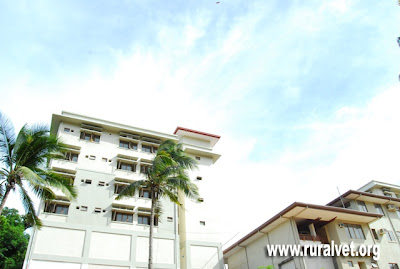
The Shangri La being built in Boracay which we passed on our way to Puka.

Puka Moment
And finally, the slideshow of the photos. I'm too lazy to embed them one by one.
Some notes on Seair:
- Their planes are not new.
- Delays are common. Our incoming flight was delayed but I was not informed so we arrived very early for our flight.
- I had no problem with cabin pressure.
- The plane flies low but it's not as low as I first thought. Ten thousand feet is still high but it offers a different perspective.
Boarding the small Seair plane in Manila.
Laguna Lake Sunrise as seen from the Dornier's window.
Boracay Island as seen from the window of the plane.
We stayed in Le Soleil de Boracay which is owned by P.J. Lhuiller Co.

Le Soleil beachfront.
In D'Talipapa:
We bought some seafoods in D'Talipapa Market and had them cooked in Beach Camp, Stall # 27 D'Talipapa. Lolito Cahoncoy, 0920-677-2950.
Slippers in various shapes and sizes in D'Talipapa.
The Boracay Sea.
Other highlights of the trip:
- We got addicted with Jhona’s Fruitshakes. We went there for three consecutive days. Their sandwiches are also OK.
- We also tried Cocomangas shakers and jars for two nights in a row.
- We attended the Tropical Hat Party of the PVMA just to eat. Ha ha ha!
- The Seair crew handles baggage carefully. I checked in my Jansport laptop backpack but I forgot to tell them that it contains a laptop. But thankfully they were able to ID and put two Fragile stickers on the bag. Imagine that on another airline, I must have ended with a broken or even fragmented laptop!
- The weather was not good during our first two days there. The sun only showed up on our third and fourth day.
- We attempted to bike to Puka beach but the vet I’m with felt bad halfway there. Who wouldn’t, the road is all uphill. Instead of proceeding to Puka we reverted to Fairways Butterfly Garden. Being rainy, there were few butterflies. We just petted their fruitbat Mikey. Yeah, fruitbats don't bite. But their nails, if you got them scared, can create a good laceration.
- The next day we rode a tricycle to return to Fairways to have some photos because we didn’t bring our cameras the previous day. We then proceeded to Puka via a tricycle. We paid 20 pesos each from Fairways to Puka. But going back is another thing. It turns out that the multicabs going there has an hourly schedule. Thankfully, a tricycle decided to go back to Balabag which we’re able to ride. We paid 20 again although I saw that the locals only pay 10 pesos.
- Would I go back to Boracay again? I don't think so. I prefer a peaceful vacation. I don't like crowded beaches. I hate seeing people that I don't want to see. I would still prefer the beaches of Palawan.
The Sleepiest Days of My Life
The Shangri La being built in Boracay which we passed on our way to Puka.
Puka Moment
And finally, the slideshow of the photos. I'm too lazy to embed them one by one.
Tuesday, February 19, 2008
Records
Examining animals, on a farm level can be tricky. Records are very helpful. My professor in zootechnics says that the Japanese are the best record keepers. They keep a record of all the events in the farm in a very systematic way. He narrates that even after decades, their farm records are still available. Of course these old notes are important because production events and even production problems come in a cyclic manner. So all the events experienced in a farm, even if the personnel has been changed, can be quickly read.
All the important data are recorded: feed consumption, growth, weight, mortalities, morbidities, reproductive parameters... In short, everything must be recorded, even changes in weather patterns or temperature fluctuations must be written. Some farm owners neglect these basics. Most are only after the financial records.
For me, even a very simple recording system would do because I can easily compute for the secondary parameters as long as it's accessible and is systematically done.
----
I was also earlier thinking of examination of animals in the farm. The best way for me, is to "feel" them. One must be on the level of the animals to properly assess what and how they feel. For example, feeling the air inside a broiler brooding area is useless. In Physics, warm air rises, so expectedly, the air inside would be warm. But to get an idea of what the chicks feel, try to touch the litter. The chicks are standing and roaming on the litter materials and not flying in the air (of course!) so the quality of the litter is important.
Use your other senses too. How do they sound? How do they smell? How do they behave? These must all be noted because in a way or another these will have an effect on their short lives.
All the important data are recorded: feed consumption, growth, weight, mortalities, morbidities, reproductive parameters... In short, everything must be recorded, even changes in weather patterns or temperature fluctuations must be written. Some farm owners neglect these basics. Most are only after the financial records.
For me, even a very simple recording system would do because I can easily compute for the secondary parameters as long as it's accessible and is systematically done.
----
I was also earlier thinking of examination of animals in the farm. The best way for me, is to "feel" them. One must be on the level of the animals to properly assess what and how they feel. For example, feeling the air inside a broiler brooding area is useless. In Physics, warm air rises, so expectedly, the air inside would be warm. But to get an idea of what the chicks feel, try to touch the litter. The chicks are standing and roaming on the litter materials and not flying in the air (of course!) so the quality of the litter is important.
Use your other senses too. How do they sound? How do they smell? How do they behave? These must all be noted because in a way or another these will have an effect on their short lives.
Soulmate
The most hair-raising blog award goes to Soulmate. I remember that last year they sent pancit malabon to our office.
And by the way, their Garden Setup looks nice. It comes complete with landscaping and miniature waterfalls.
Look further in the Multiply Catalogue and you'll see some photos with "live" wake simulation. It's so morbid I have to stop here.
And by the way, their Garden Setup looks nice. It comes complete with landscaping and miniature waterfalls.
Look further in the Multiply Catalogue and you'll see some photos with "live" wake simulation. It's so morbid I have to stop here.
Monday, February 18, 2008

US Beef Recall
USDA declares major beef recall from California slaughterhouse under abuse investigation. A recall of this kind and nature is not possible here in the Philippines. Here, even downers are slaughtered. Sayang kasi.
Yes, its a waste but it's dangerous to eat.
Yes, its a waste but it's dangerous to eat.
Very Long Exam
- Discuss the hormonal interplay during estrus period in swine. Include the time frame interval. Point out the events leading to estrus, ovulation and CL regression.
- Discuss the difference between the mechanism of action of LH and E2.
- What comprise the hypothalamic pituitary gonadal axis. How would you be able to determine its maturity using synthetic hormones? Discuss your answer/make illustrations if possible.'
- Discuss cystic ovaries and persistent CL using your knowledge on reproductive endocrine system.
- Make illustrations and/or cite examples showing the positive/negative feedback mechanisms of hormones. limit your answer on reproduction.
Sunday, February 17, 2008
PVMA 75th Annual Convention and Scientific Conference
It will be next week from February 20-22 in Boracay and I'm going. The theme is:
As customary, the convention is spread in three days. The highlight of the first day is the registration. Nothing will happen so I must have a backup on my itinerary. Possibly I could explore the caves of Boracay by Wednesday.
In the morning of the second day is the usual opening ceremonies. The highlight of this day I guess would be the All White Party in the beach front of the Boracay Regency. Hmmm. Not very appealing since I hate whites because it reminds me of my vet proper uniform.
On the 3rd day would be the simultaneous sessions of the different veterinary specializations. I don't like this because I usually mix up my schedule and end up with incomplete sessions because the speakers are not synchronized. So shifting to another room/topic is impossible.
---
Special thanks to my sponsor. You know who you are. And you don't read this. Ha ha ha.
The Veterinarian:I will arrive Wednesday and will be back on Saturday afternoon. I'll be flying Seair. Is it safe? I don't know. But I know that it would be the smallest aircraft I will be flying on.
A Century Hence
"Striving towards
Professional Excellence"
As customary, the convention is spread in three days. The highlight of the first day is the registration. Nothing will happen so I must have a backup on my itinerary. Possibly I could explore the caves of Boracay by Wednesday.
In the morning of the second day is the usual opening ceremonies. The highlight of this day I guess would be the All White Party in the beach front of the Boracay Regency. Hmmm. Not very appealing since I hate whites because it reminds me of my vet proper uniform.
On the 3rd day would be the simultaneous sessions of the different veterinary specializations. I don't like this because I usually mix up my schedule and end up with incomplete sessions because the speakers are not synchronized. So shifting to another room/topic is impossible.
---
Special thanks to my sponsor. You know who you are. And you don't read this. Ha ha ha.


Saturday, February 16, 2008
UPLB Feb Fair 2008
Highlights:
- I came without plans.
- I slept on a booth and when I woke up, the tent is gone.
- I met some batch mates.
- I met new brods and sis.

Tarabidan Brods and Sisses.

VKV Brods and Sisses.


Acacia Tree in front of Student Union Bldg.

DL Umali Freedom Park, UPLB Carillon is at the center.

DL Umali Hall (Audi)
Subscribe to:
Posts (Atom)